


 People who buy investment gold for the first time are often surprised by how different gold bars can look. Two bars may have exactly the same weight, purity, and market value, yet appear completely different in size, color, engraving, packaging, and overall design. This can sometimes lead new buyers to wonder whether one bar is more valuable or purer than another simply because it looks different.In reality, appearance is only one part of a manufacturer's production process. Every accredited precious metals manufacturer develops its own production methods, branding, security features, and packaging standards. These differences help distinguish products from one manufacturer to another while maintaining internationally recognized specifications for purity and weight.Understanding why these variations exist makes it much easier to compare investment bars with confidence.
Every Manufacturer Has Its Own Manufacturing Standards
Although investment gold bars follow internationally accepted purity standards, there is no requirement that every manufacturer must produce bars that look identical. Each manufacturer chooses its own molds, finishing techniques, engraving methods, packaging materials, and branding.
Some manufacturers prefer a clean, minimalist appearance with simple lettering and smooth surfaces. Others include intricate logos, decorative patterns, textured finishes, or detailed security elements that make their products instantly recognizable.
Even when two bars both contain 50 grams of 999.9 fine gold, they may come from completely different production lines using different equipment and quality-control procedures.
Different Production Methods Create Different Shapes
The manufacturing process has a significant influence on the appearance of a finished gold bar. Cast bars and minted bars are produced differently, resulting in distinct visual characteristics.
Minted bars begin as rolled gold sheets that are cut into precise blanks before being struck under high pressure. This process produces sharp edges, uniform dimensions, and highly detailed engravings.
Cast bars, by comparison, are created by pouring molten gold into molds. Their surfaces may show subtle texture variations, softer edges, and slight differences that reflect the casting process itself.
Neither production method makes the gold more or less valuable. They simply produce products with different visual styles.
Packaging Can Vary Significantly
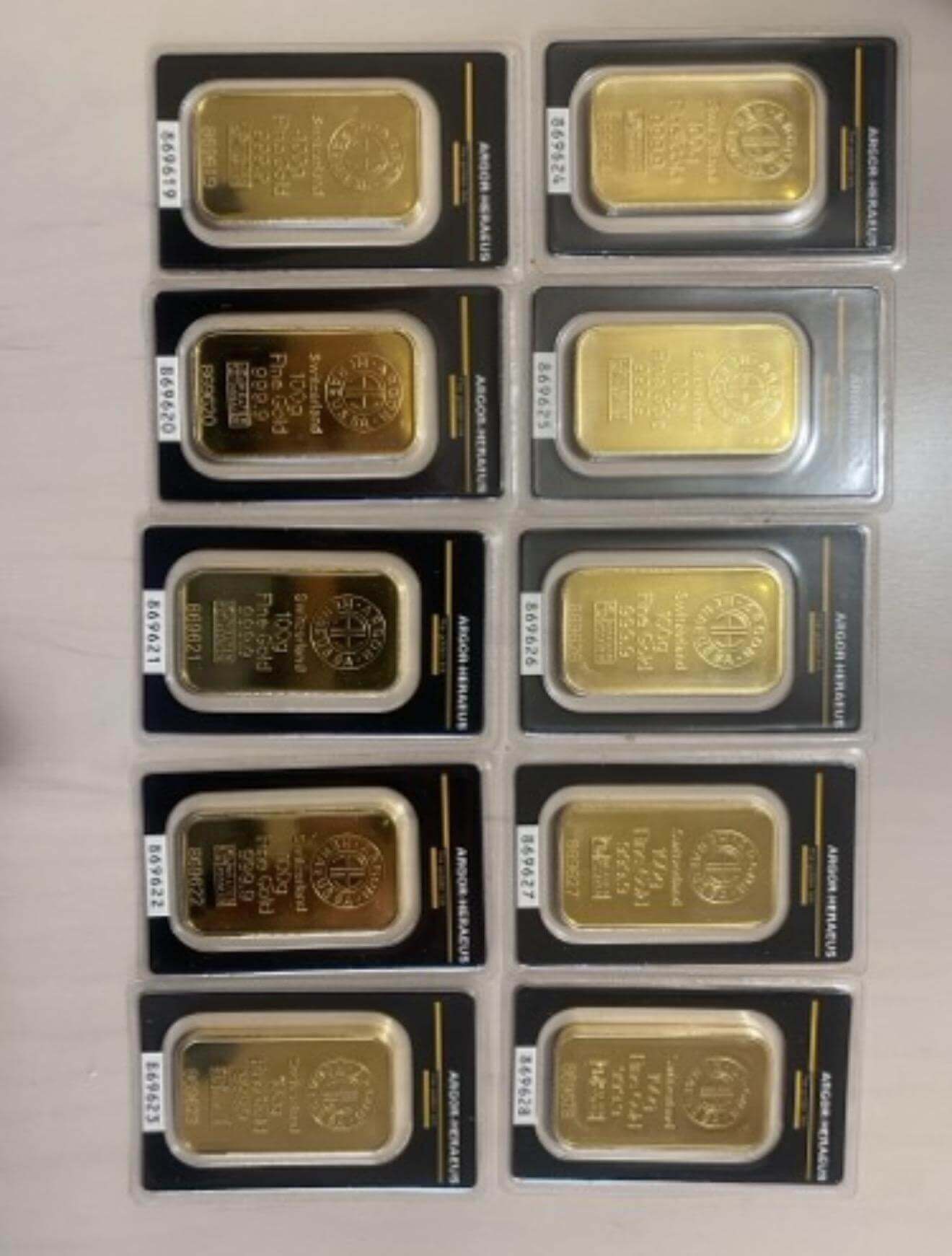 One of the most noticeable differences between manufacturers is the packaging used to protect investment bars.
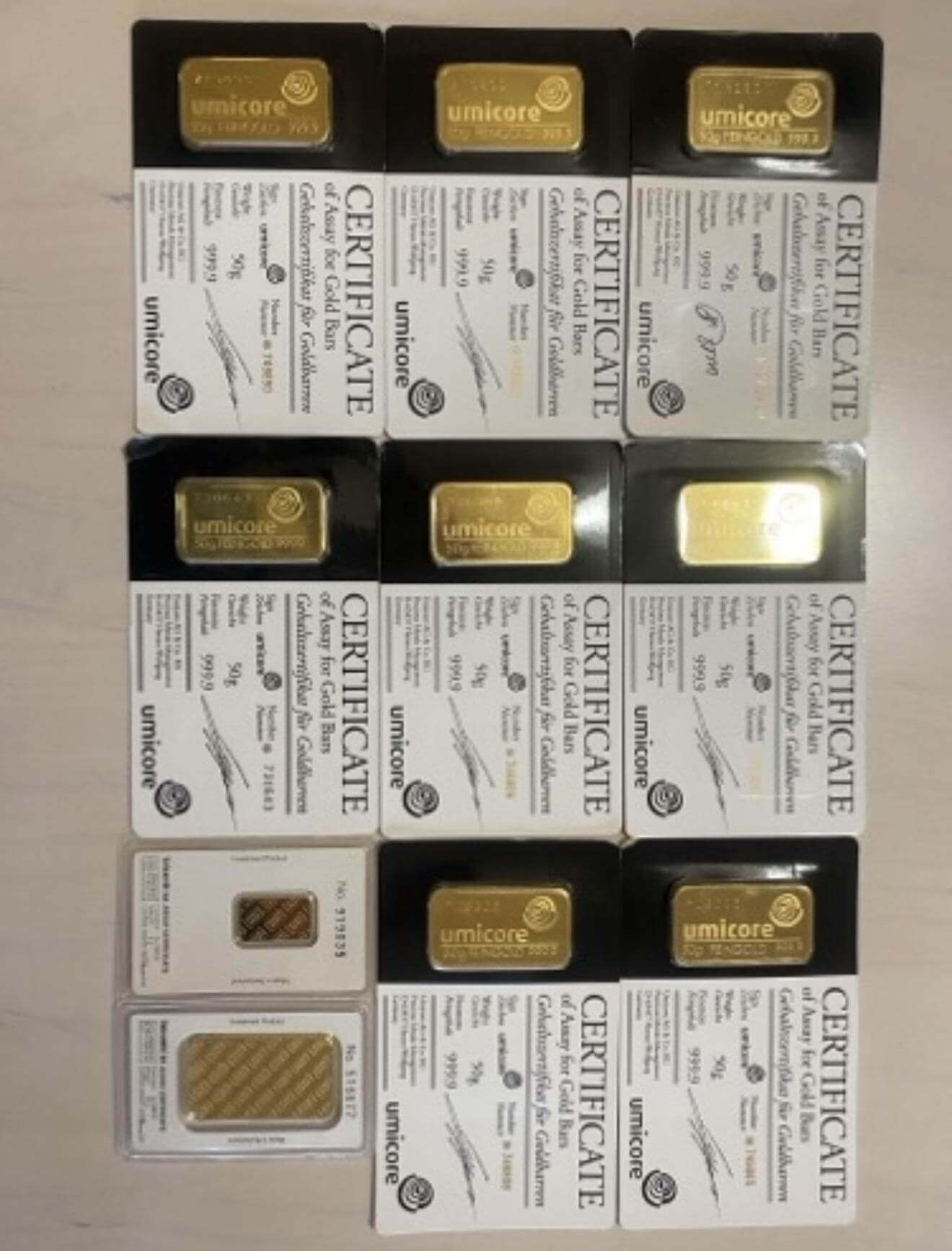
Some manufacturers seal their bars inside transparent assay cards that combine the certificate and packaging into a single unit. Others use rigid plastic capsules, laminated certificates, or security holders with multiple protective layers.
Packaging often reflects a manufacturer's own design philosophy and security strategy. Some focus on simplicity, while others incorporate holograms, textured backgrounds, microprinting, or tamper-evident materials.
Even when two bars originate from manufacturers with similar reputations, their packaging may look completely unrelated.
Brand Identity Plays an Important Role
Manufacturers invest considerable effort into building recognizable brands. Their logos, typography, colors, and engraving styles help customers identify products quickly in both retail and wholesale markets.
Over time, collectors and investors become familiar with the visual identity of different manufacturers. A particular logo placement, lettering style, or packaging color can often identify a manufacturer immediately without reading every detail on the certificate.
This branding does not change the intrinsic value of the gold itself, but it contributes to product recognition throughout the precious metals industry.
Security Features Continue to Evolve
Modern investment bars frequently include security features that were uncommon only a decade ago.
Depending on the manufacturer, these features may include laser engraving, microscopic text, serial numbers, textured backgrounds, optical effects, security patterns, QR codes, or authentication systems designed for digital verification.
Manufacturers continually improve these technologies to make counterfeit production more difficult while allowing buyers and dealers to authenticate products more efficiently.
Because every manufacturer develops its own approach, two genuine gold bars may contain completely different security elements.
Surface Finish Does Not Indicate Purity
 Many first-time buyers assume that a brighter or shinier gold bar must contain purer gold. In practice, surface appearance depends largely on finishing techniques rather than metal purity.
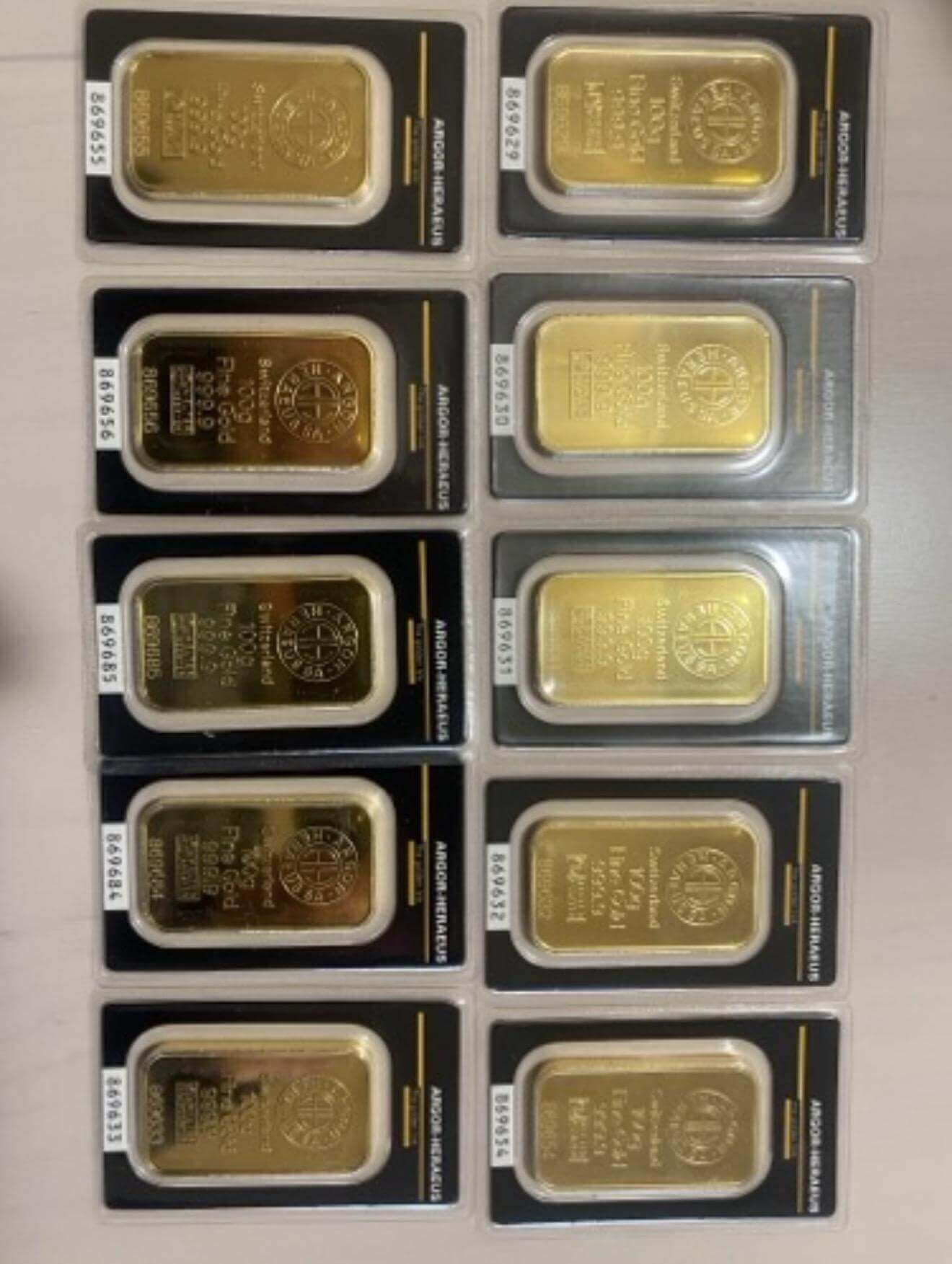
Some manufacturers polish their bars to create a mirror-like finish. Others intentionally leave a softer satin appearance or fine matte texture. Lighting conditions, camera flash, fingerprints, and protective plastic packaging can also affect how the surface appears in photographs.
A slightly darker tone, a warmer color, or a different reflection usually reflects manufacturing choices rather than differences in gold content.
Dimensions May Also Be Different
Even bars with identical weight can have noticeably different dimensions.
One manufacturer may produce a longer, thinner bar, while another produces a shorter, wider version containing exactly the same amount of gold. Thickness can also vary depending on the production process and overall design.
These dimensional differences often surprise new investors, but they are entirely normal and are not an indication that one bar contains more gold than another.
Older and Newer Designs Can Exist at the Same Time
Manufacturers periodically update their branding, packaging, or security features. As a result, older bars may continue circulating alongside newly produced versions for many years.
An investor purchasing gold on the secondary market may encounter bars with discontinued logos, older certificate designs, or previous generations of packaging that are still fully authentic.
The existence of multiple design generations is common throughout the precious metals industry and does not automatically indicate a problem with authenticity.
Why Variety Benefits Investors
 The diversity of manufacturer designs offers several practical advantages. Brand recognition helps experienced buyers identify products quickly, while modern security features support authentication. Competition between manufacturers also encourages continuous improvements in packaging, production quality, and anti-counterfeiting technology.
Rather than viewing visual differences as a source of uncertainty, investors can see them as evidence of independent manufacturing standards developed by established precious metals manufacturers around the world.
Conclusion
Gold bars from different manufacturers often look remarkably different because every manufacturer has its own production techniques, branding, packaging, finishing methods, and security technologies. These differences affect appearance but do not change the fundamental characteristics of investment gold when the bars meet recognized standards for weight and purity.
For investors, understanding these variations helps remove unnecessary concerns when comparing products from different manufacturers. Instead of focusing solely on appearance, it is more useful to evaluate factors such as the manufacturer's reputation, assay documentation, serial numbering, product condition, and the overall integrity of the investment bar.